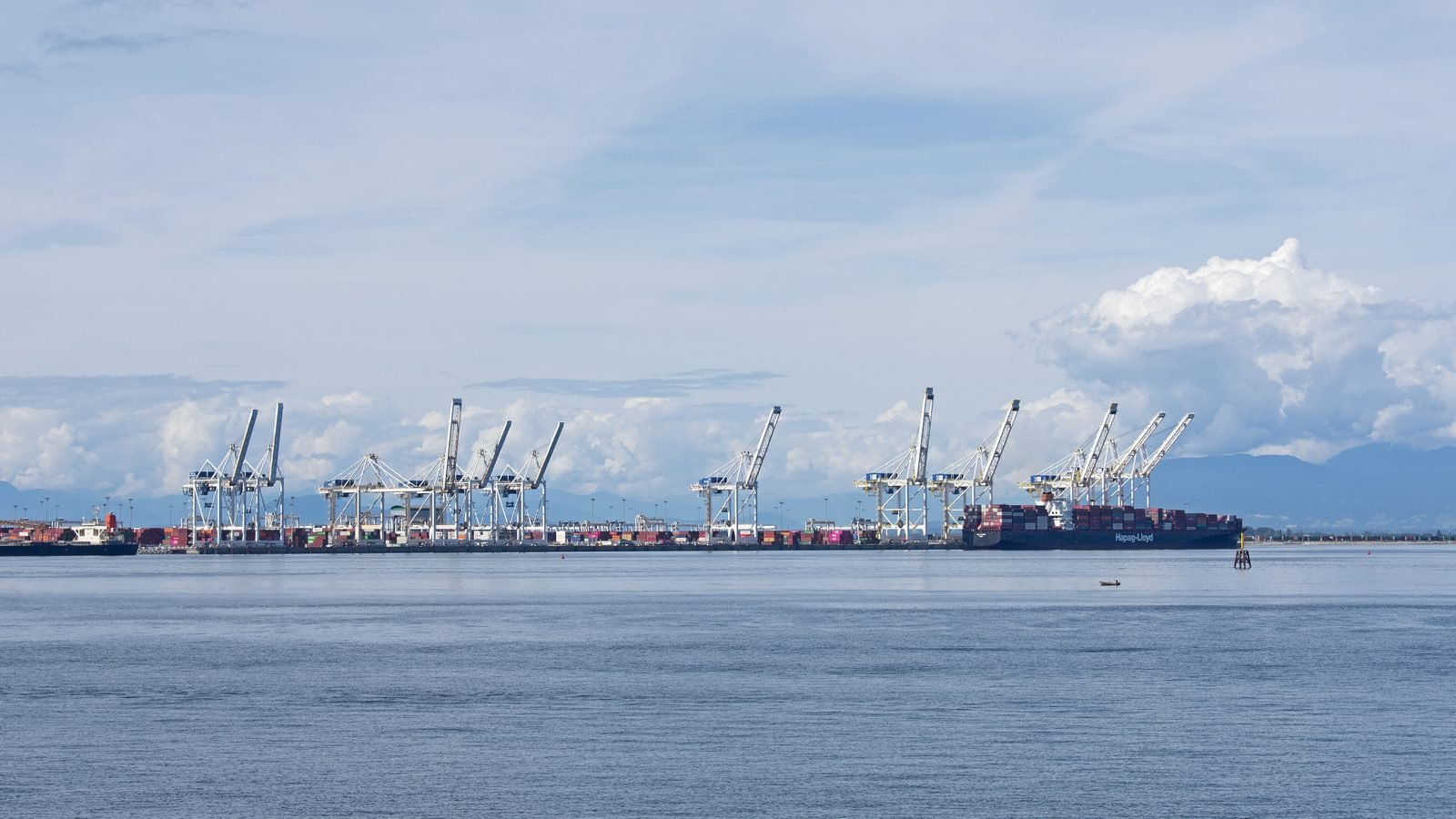
The federal cabinet has listed Roberts Bank Terminal 2 (RBT2) at the Port of Vancouver as a project of national interest under the Building Canada Act. The instrument is Order in Council P.C. 2026-1047, dated 30 October 2026, made on the recommendation of Dominic LeBlanc, President of the King’s Privy Council. RBT2 is a proposed three-berth container terminal in Delta, B.C. The proponent is the Vancouver Fraser Port Authority (VFPA), an arm’s-length federal port authority.
What listing does
- According to the OIC’s explanatory note, listing “results in immediate, deemed fulfillment of substantive prerequisites to the release of federal permits and authorizations listed in Schedule 2 of the Act.”
- Remaining federal approvals are then consolidated into one omnibus authorisation, the Conditions Document, issued by the responsible minister after further assessment and consultation with Indigenous communities. Authorisations already granted remain valid.
- Still outstanding: a Fisheries Act authorisation, which would also serve as a Species at Risk Act permit (the VFPA applied in October 2024; Fisheries and Oceans Canada found the application complete in June 2025 but had not decided), and an authorisation under the Canada Marine Act.
The project and the money
- Capital cost $5.9 billion, excluding financing. A financing arrangement is still being worked out with “other federal partners”, and Transport Canada targets a final investment decision by mid-2027.
- About 120 ha of terminal landmass, a 45 ha widened causeway and a 3 ha tug basin, adding 2.4 million TEU of annual capacity, roughly 50% more container capacity at the port.
- Ottawa says listing could move commercial operations from 2039 to 2035.
- Cabinet’s case: without the terminal, Canadians would pay $800–900 million a year in extra shipping costs from as early as 2031. Combined with other supply-chain investments, it says, import container costs could fall 25%. It also cites $3 billion a year in GDP, about 17,000 supply-chain jobs and $631 million a year in tax revenue. These are government forecasts, and the OIC notes that opponents who commented on the Gazette notice questioned how the GDP and jobs figures were calculated.
What the government’s own record says about the environment
- A federal review panel concluded in March 2020 that the project is likely to cause significant adverse environmental effects, including on Chinook salmon, southern resident killer whales (SRKW), Dungeness crab, birds and wetlands. Cabinet found those effects “justified in the circumstances” in April 2023.
- The OIC’s explanatory note states plainly that the project “would cause significant adverse effects to SRKW, including reduced Chinook salmon prey availability, destruction of critical habitat, and an increase in underwater noise.” It counts 76 whales as of October 2026.
- Mitigation includes stopping construction work when whales are near, noise limits during operations, and 102 ha of fish-habitat offsetting. Ottawa also points to $258 million over five years for its Whales Initiative.
- Indigenous views: the VFPA has mutual benefit agreements with 27 Indigenous communities. The note records that “no Indigenous community viewed the Project as furthering Canada’s climate objectives” and that several doubted economic opportunities would reach Indigenous people.
Who pays, who gains
Importers, exporters and, through shipping costs, consumers are the intended beneficiaries, according to cabinet’s forecasts. Delta residents, Tsawwassen First Nation and fishers live with the construction and the marine effects identified in the 2020 review. Taxpayers’ exposure depends on the financing deal, which has not been announced. The order enters RBT2 as item 2 in Schedule 1.