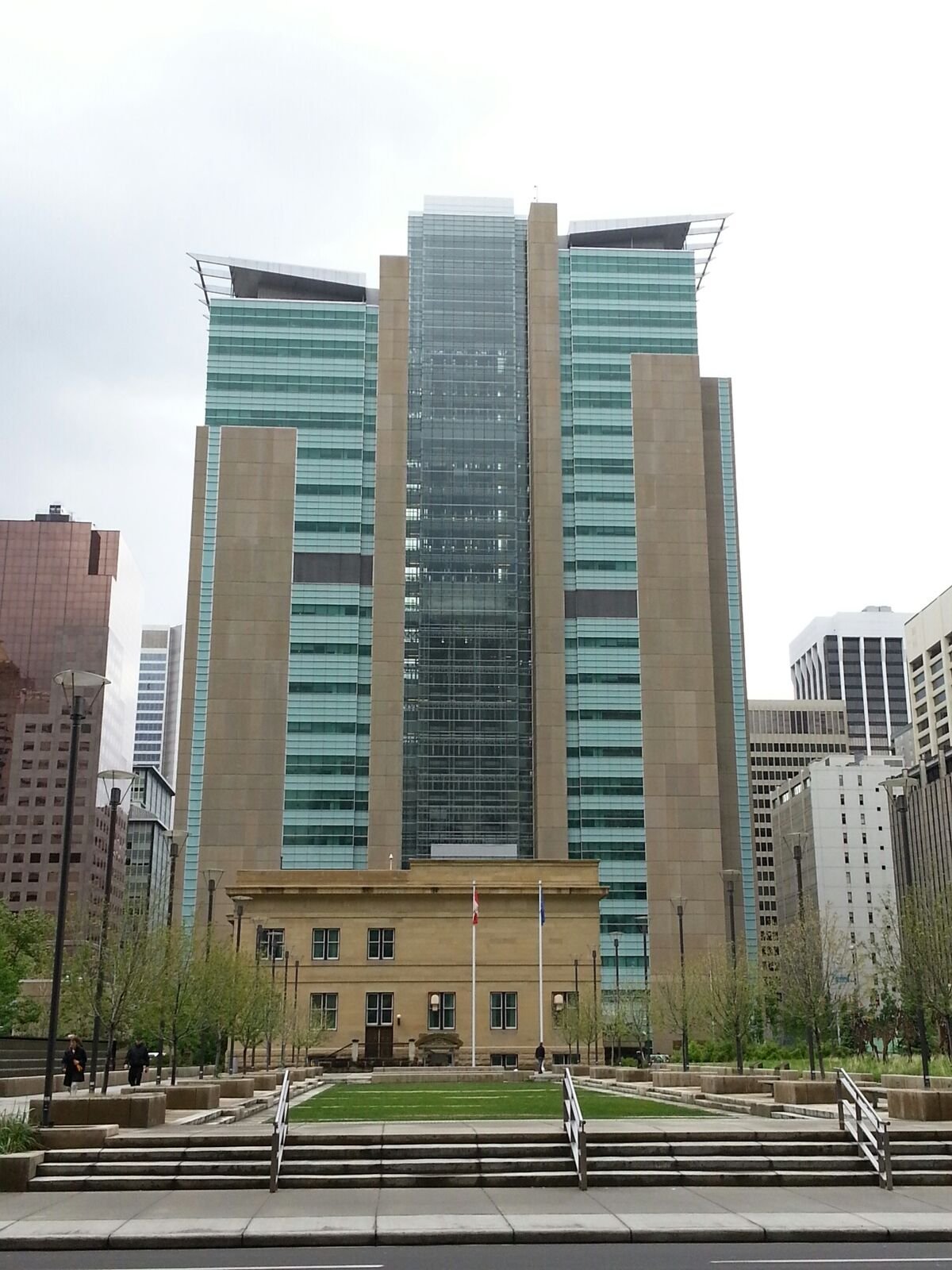
On Friday, 9 October 2026, the Court of Appeal of Alberta released its opinion in Reference re Impact Assessment Act, as amended, 2026 ABCA 320. Four of the five judges (Justices Crighton, Strekaf, Ho and Fagnan) concluded that the “designated projects” part of the federal Impact Assessment Act (IAA) and the Physical Activities Regulations are “unconstitutional, except insofar as they apply to federal undertakings.” Justice Kevin Feehan dissented and would have upheld the law.
The majority found Parliament’s 2024 amendments addressed some of the Supreme Court’s concerns but not “the fundamental problem”: final federal say over the broad effects of a mainly provincial project.
How the case got here
- 2019: Parliament enacted the IAA, replacing the 2012 environmental assessment law.
- 2022 and 2023: On Alberta’s first reference, the Court of Appeal (2022 ABCA 165) and then a Supreme Court majority (Reference re Impact Assessment Act, 2023 SCC 23) found the designated-projects scheme unconstitutional. The Supreme Court upheld the separate part covering projects on federal lands or outside Canada (ss. 81–91).
- 20 June 2024: Parliament amended the IAA through the Budget Implementation Act, 2024, No. 1 (S.C. 2024, c. 17), saying the changes answered the Supreme Court.
- 20 November 2024: Alberta’s cabinet referred the amended Act back to the Court of Appeal (Order in Council 316/2024). The court heard argument on 24–26 February 2026.
What the majority found
- The list of “federal” effects is still too broad. The amended Act defines “adverse effects within federal jurisdiction” to include changes to migratory birds, health, social and economic conditions of Indigenous peoples, and other matters. The majority held several of these exceed Parliament’s powers. On birds, it said federal jurisdiction is “considerably narrower” than what the Act captures (para. 117). On Indigenous peoples, it said the provisions “are open to unspecified and unlimited application, allowing for a radical intrusion on provincial jurisdiction” (para. 137).
- The new “non-negligible” threshold may not change much. Parliament added “non-negligible” before many listed effects. The majority said this “may not constitute a meaningful reduction” in what the s. 7 prohibition catches, because it is hard to imagine a major project that would not risk at least one non-trivial listed effect (paras. 49–50).
- The decision still reaches the whole project. Under ss. 60–64 the minister or cabinet still weighs factors that are not limited to federal effects and can attach any conditions considered appropriate. The majority said this allows regulation of a project “qua project”, as a whole, based on non-federal concerns (para. 188).
- Delay. Timelines can still be extended without a fixed limit, so “the potential for indefinite delay remains” (para. 74).
- No quick fix. Canada asked the court, in the alternative, to sever the s. 7 prohibition. The majority said that would not cure the problem (para. 195). It did not decide Alberta’s backup argument on interjurisdictional immunity.
Alberta did not challenge s. 8, which bars federal authorities from issuing permits or funding for a designated project until the assessment is done. The majority noted that kind of structure was endorsed by the Supreme Court in Oldman River (para. 194).
The dissent
Justice Feehan wrote that Parliament’s “extensive amendments” were made specifically to answer the Supreme Court and that they did so: “the new iteration of the Act is constitutionally within the jurisdiction of the Parliament of Canada” (para. 202). He called it “a valid exercise of federal jurisdiction, limited to specifically defined effects within federal responsibility” (para. 365).
Who argued what
Ontario, Saskatchewan, the Canadian Association of Petroleum Producers, Enserva, the Indian Resource Council, the Canadian Constitution Foundation, the Canadian Taxpayers Federation and the Business Council of Alberta intervened generally on Alberta’s side. Cold Lake First Nations, Ecojustice, and Nature Canada with West Coast Environmental Law supported Canada (para. 12). After the ruling Ecojustice, which argued for Canada, publicly urged the Carney government to appeal. The Canadian Constitution Foundation, which argued for Alberta, called it a second defeat for the “No More Pipelines” law, a nickname critics use for the IAA.
What this does and does not do
A provincial reference produces an opinion, not an order striking a federal law. The IAA stays in force unless Parliament amends it or the Supreme Court of Canada reaches the same result. The first Alberta reference went on to the Supreme Court on appeal (dissent, para. 206), and Ecojustice says Ottawa can take this one there too.
Update, 11 October 2026: On 9 October, Environment Minister Julie Dabrusin’s office told The Canadian Press that the government is “reviewing the decision and considering next steps.” Press secretary Amy Falkner wrote that the IAA “is fundamental to the advancement of this work” and that the opinion “does not change our commitment to engage all provinces in the spirit of co-operative federalism.” Premier Danielle Smith called on Ottawa to “refrain from yet another appeal.” As of Sunday morning no appeal to the Supreme Court has been announced. Our 10 October text said we had not found a federal statement; that line has been replaced (see corrections).
The opinion does not address the Building Canada Act, under which the West Coast oil pipeline (Pacific Link) was listed in Schedule 1 on 1 October. It also does not touch federal permits under other statutes such as the Fisheries Act, or federal projects, which the majority left within Ottawa’s power.
What this piece refuses
Do not write that the court “struck down” or “killed” the Act: it is an advisory reference opinion and the law remains on the books. Do not write that pipelines or mines can now proceed without federal review: federal undertakings, federal lands and other federal permits are untouched. Do not say the ruling decides Pacific Link; it does not mention it. Do not call the vote unanimous; it was 4–1.
Contested: Alberta, energy producers and allied provinces say the 2024 amendments were cosmetic and the court has now said so twice. Environmental groups and Cold Lake First Nations say federal assessment protects fish, birds, Indigenous rights and downstream communities, and that the Supreme Court has narrowed Alberta Court of Appeal rulings before, as in the carbon-pricing reference. Both readings agree the final word likely belongs to the Supreme Court.
Bottom line
Verified as of 10 October 2026 from the court’s reasons: by 4–1, the Court of Appeal of Alberta says the amended IAA designated-projects scheme and the Physical Activities Regulations are unconstitutional except for federal undertakings. The opinion is advisory; the Act remains in force. Watch for a federal appeal to the Supreme Court and any statement from the environment or justice ministers.