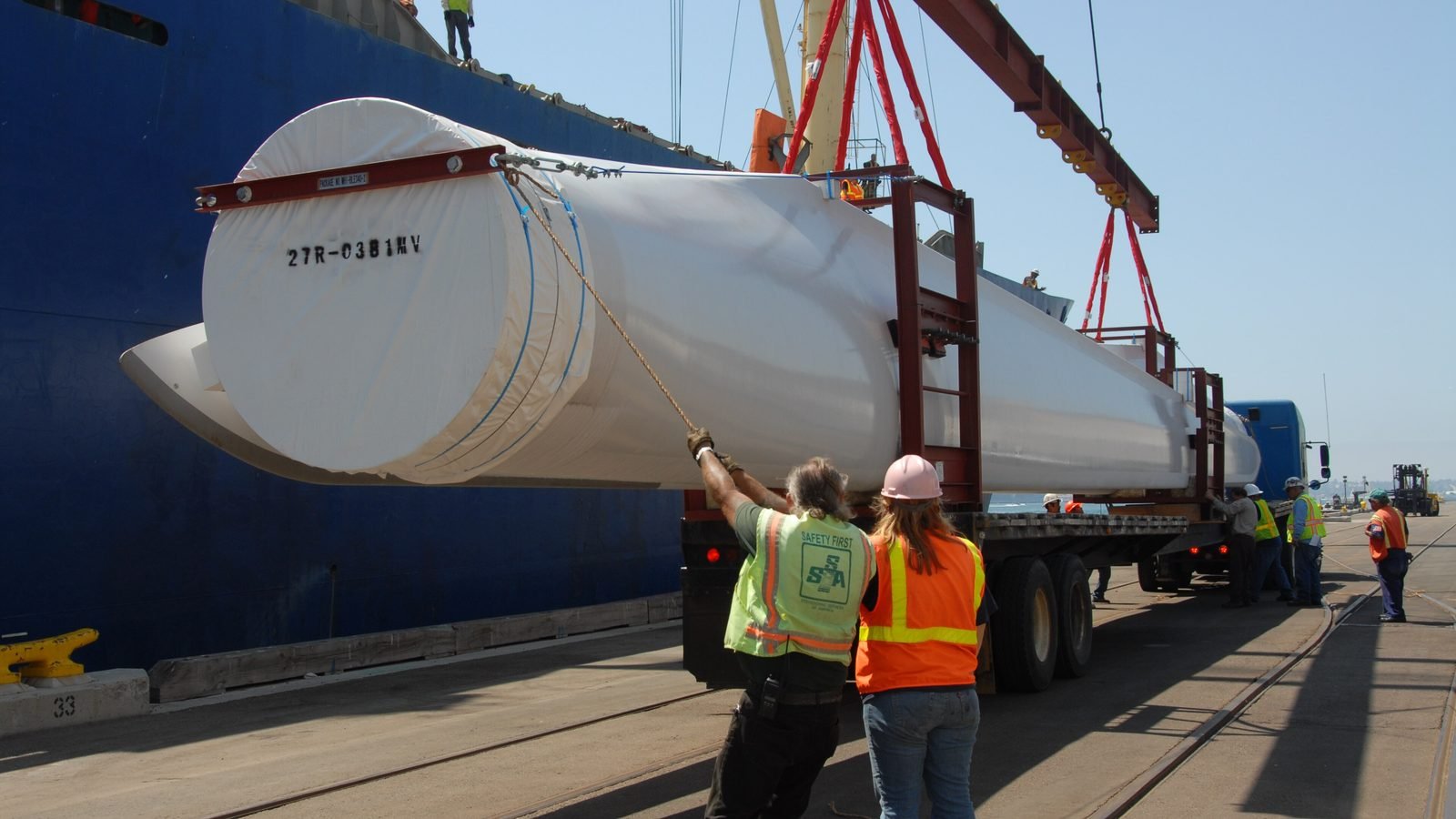
Two presidential documents dated 22 October 2026 appear in today’s Federal Register. Together they show the administration’s energy direction: wind imports treated as a security risk, and petroleum treated as a defence resource worth federal money.
1. Proclamation 11074: wind turbines under Section 232
Under Section 232 of the Trade Expansion Act of 1962, the Commerce Secretary investigated imports of wind turbines and their parts. The proclamation (91 FR 68001) says he found that these imports “threaten to impair the national security,” and the President concurs. Commerce’s findings, as recited in the proclamation, include that:
- wind is “unreliable and intermittent” and diverts the grid from steadier sources, with operators leaning on fast-ramping fossil backup;
- networked inverters, mostly imported, are “an exploitable vulnerability” that could allow remote access to power systems;
- turbines create radar “clutter” that can affect air traffic control, weather forecasting and military radar;
- U.S. wind relies on imported components, and domestic capacity for items such as blades “has not meaningfully increased.”
The remedy is negotiation, not a new tariff. Commerce and the U.S. Trade Representative are to pursue agreements with trading partners and report within 180 days. The proclamation says the President “may consider alternative remedies in the future” depending on how the talks go. It states that it does not change existing Section 232 tariffs on steel, aluminium and copper, which already cover some turbine parts made from those metals.
“…it is necessary and appropriate to enter into negotiations with foreign trading partners to adjust the imports of wind turbines…” — Proclamation 11074, cl. 12
2. Presidential Determination 2027-01: oil under the Defense Production Act
In a memorandum to the Secretary of War (91 FR 68011), the President determines under Section 303 of the Defense Production Act that domestic petroleum production, refining and logistics (exploration and production, gathering and transmission pipelines, storage and marine terminals) are “essential to the national defense.” He finds that industry cannot be expected to supply them in time because of “constrained financing, long lead times, permitting and infrastructure bottlenecks, and supply chain limitations.” Relying on the January 2025 national energy emergency (EO 14156), he waives the usual Section 303(a)(1)–(6) requirements and authorises purchases, commitments and financial instruments. No dollar amount is given.
What this piece refuses
Commerce’s full Section 232 report on wind turbines is not published with the proclamation. We report its findings only as the proclamation recites them, not as established fact. Claims that wind “costs” or “saves” consumers a set amount are not in either document and are not used.
Bottom line
Wind imports are now formally a national-security problem, but the first step is talks with a 180-day update, not a tariff. Oil gets a DPA determination that lets the defence department spend on production, refining and pipelines.