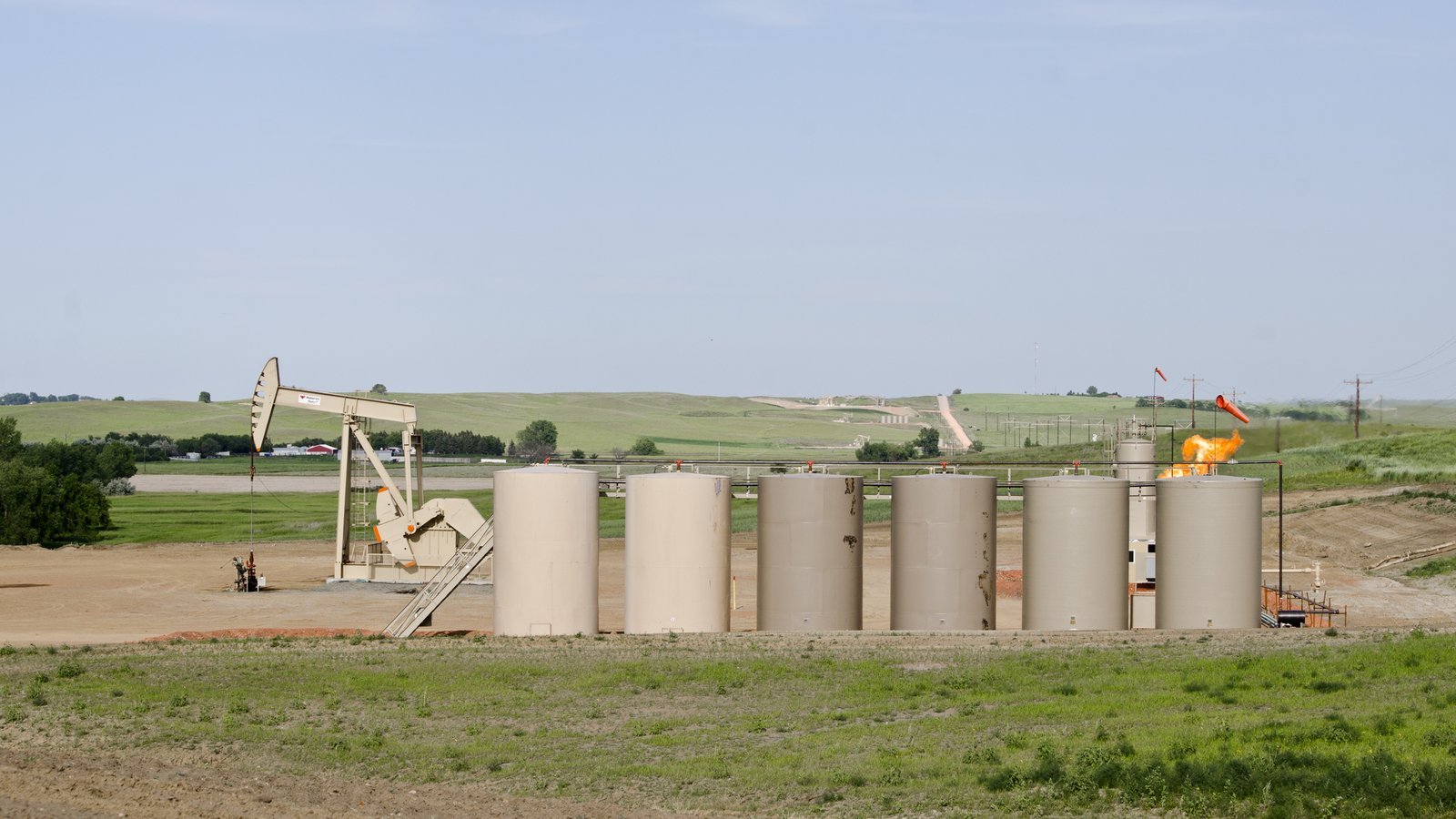
The U.S. Environmental Protection Agency published a proposed rule on 29 October 2026 (91 FR 68234, Docket EPA-HQ-OAR-2025-0163) to revise the methane and VOC standards for the crude oil and natural gas sector that were finalised in March 2024 (NSPS OOOOb and Emission Guidelines OOOOc). EPA says it is responding to petitions for reconsideration and to “policy decisions and supporting legal interpretations.”
What EPA proposes
- Rescind the Super Emitter Program. Under the 2024 rule, EPA-certified third parties could detect “very large emissions events” with approved technologies and notify EPA, which would pass the notice to operators, who then had to investigate and fix the leak. EPA now says the program is not “well-grounded in policy and law” and proposes to remove the certification and notification provisions from OOOO, OOOOa, OOOOb and OOOOc, including the expectation that states set up their own versions.
- Lighter rules for some well sites. EPA co-proposes two options: a marginal vs non-marginal subcategory with reduced requirements for marginal (low-production) wells, or a conventional vs non-conventional subcategory with reduced requirements for conventional wells.
- Associated gas. For gas produced alongside oil, EPA proposes that routing it to a sales line is no longer the “best system of emission reduction”; routing to a flare or control device achieving at least 95% reduction would be the standard instead.
- Changes to rules on liquids unloading, process controllers, pumps, fugitive emissions, storage vessels, closed vent systems, gas-plant leaks and control devices, plus an option for optical gas imaging surveys under Appendix K at gas processing plants.
- EPA also asks for comment on “any and all” other 2024 requirements, and says the final rule “may revise, expand, or eliminate” them.
EPA’s numbers
EPA estimates the proposal would cut equivalent annualised compliance costs over 2027–2050 by about $2.7 billion (3% discount rate) to $2.8 billion (7%) a year; the co-proposal by about $2.3–2.4 billion a year (2024 dollars). Its economic-surplus estimate counts both cost savings and “the forgone value of natural gas captured as a result of less stringent compliance obligations.” The emissions-change table (methane, VOC, HAP) is published only as an image in the Federal Register text; EPA says parts of its analysis “may have resulted in overestimation of foregone emission reductions,” in this RIA and the 2024 one.
“Upon reconsideration, the EPA no longer believes that the Super Emitter Program is well-grounded in policy and law.” — EPA proposed rule, 91 FR 68234
How to weigh in
Comments are due 16 December 2026 at regulations.gov (Docket EPA-HQ-OAR-2025-0163); comments on the paperwork provisions to OMB by 30 November. EPA will hold a virtual public hearing on 13 November.
What this piece refuses
A news report this week said the administration’s oil-drilling deregulation “could save $45 billion.” We could not match that figure to this proposal, whose cost estimates are annualised, so we do not use it.
Bottom line
A proposed rollback of key parts of the 2024 methane rule: no super-emitter alerts, lighter duties for small wells and flaring allowed for associated gas. It is not final, and it is open for comment until 16 December.