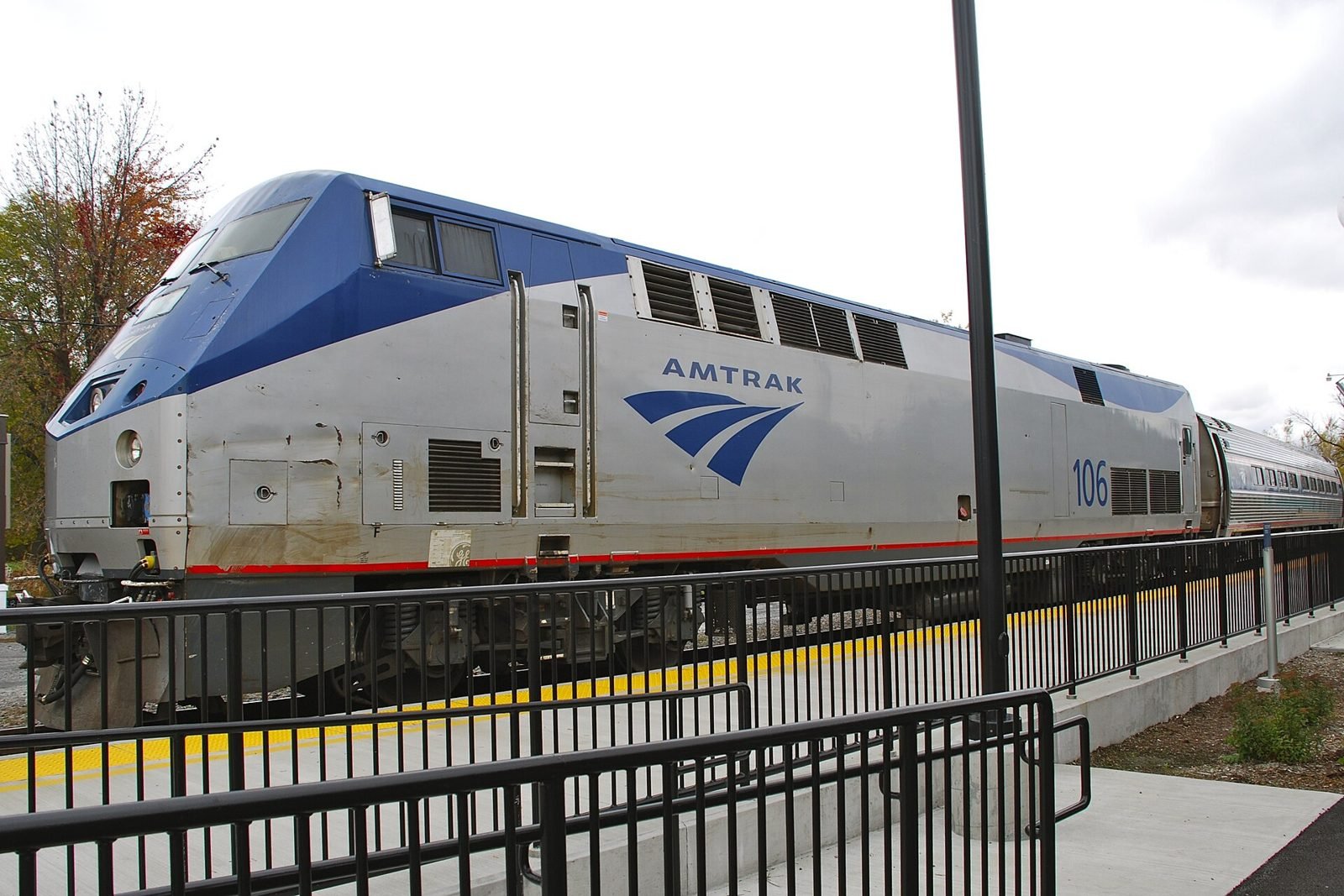
U.S. Customs and Border Protection (CBP), part of the Department of Homeland Security, has issued a notice of proposed rulemaking titled “Advance Traveler Information for Rail” (FR Doc. 2026-20884; Docket USCBP-2026-0992; RIN 1651-AB60). It was filed for public inspection on 9 October 2026 and is scheduled for publication in the Federal Register on Tuesday, 13 October. It is signed by Homeland Security Secretary Markwayne Mullin.
The proposal would add a new subpart to 19 CFR part 123, the regulations titled “CBP Relations with Canada and Mexico.” It applies to any train with a traveller on board that arrives in or departs from the United States, including a train that crosses U.S. territory in transit. Nothing changes until CBP issues a final rule.
Since 2005 railways could choose to send CBP their passenger lists in advance. Under this proposal they would have to, for every train, in both directions.
What carriers would have to send
- Notice of each train, 24 hours ahead: carrier code, train and trip numbers, car numbers, origin, border crossing point, final destination, all scheduled stops, estimated times, and a 24-hour emergency contact (proposed §123.101). A change of 30 minutes or more in the border arrival time means calling CBP at the crossing.
- Traveller data, at least 60 minutes before departure (proposed §§123.102–123.103), for every passenger and crew member: full name; date of birth; sex; country of citizenship; country of residence; travel-document type, number, issuing country and expiry, where a document is required; status on board; full itinerary; address while in the U.S. (not for those only passing through); alien registration number, passenger name record locator, known traveller number and redress number, where applicable; baggage tag information; seat and car number, if available; and phone number and email address.
- Phone and email: the carrier must ask each traveller for them and pass them on if provided. If a traveller does not provide them, the carrier is not required to transmit them.
- Updates: anyone who boards or leaves before the border must be reported before the train leaves that station. Carriers using interactive systems would also send a “close-out” list of who actually boarded within 30 minutes of departure.
- Document check: the carrier must compare each traveller’s document with the data it sends, confirm the document appears valid, and confirm the traveller is the person it was issued to.
Data could be sent through a CBP-certified carrier system or a CBP-approved interchange such as the free eAPIS web portal. Active-duty U.S. military personnel travelling on orders aboard a U.S. Department of War-chartered train would be exempt.
What CBP would do with it
CBP would vet the data and send back either an acceptance or an instruction to call. If a traveller is flagged for “potential security, immigration, customs, or other law enforcement issues,” CBP “may recommend” that the carrier not board the person, though the proposal says the carrier keeps the authority to decide whom it transports. CBP also says advance data lets it use its Traveler Verification Service to build photo galleries of expected travellers for facial comparison at the port of entry.
Violations could bring civil penalties under section 436 of the Tariff Act of 1930 (19 U.S.C. 1436), seizure and forfeiture of the conveyance involved, and criminal penalties for intentional violations. CBP would weigh documented emergencies.
CBP’s own numbers
These come from the proposal’s regulatory impact analysis. They are CBP estimates, and CBP says its post-2025 projections, based on 2015–2019 averages with no growth, likely overstate traffic.
- Traffic: about 3,497 passenger-train and 70,215 cargo-train border crossings a year (arrivals and departures), and about 231,962 manifested passengers a year from 2026 to 2030.
- Participation today: three passenger carriers have used the voluntary programme since 2005, and one does now. No freight railway ever has. Two small passenger carriers stopped international service during COVID-19 and have not resumed.
- Costs: about $58,430 a year for passenger carriers, $380,495 for cargo carriers and $639,071 for CBP.
- Claimed benefits: CBP expects advance data to cut border waits by half an hour on average, which it values at about $8.17 million a year in passengers’ time. It lists security benefits as real but unquantified.
- Paperwork: about 141,381 additional responses a year under OMB control number 1651-0088, mostly from cargo railways. CBP identified seven small U.S. cargo carriers affected and no small U.S. passenger carriers.
Privacy
The proposal says the data would be kept “in a manner consistent with” the Privacy Act and that, if the rule is finalized, CBP will issue or update any needed Privacy Impact Assessment or System of Records Notice. It does not set a retention period in the text itself. CBP points to existing assessments for its Advance Passenger Information System, which already covers air and sea travel.
Why CBP says it is needed
CBP says the lack of advance rail data “has left a gap in U.S. national security,” and that the gap matters more as air and sea screening has tightened. It cites the Madrid (2004) and Mumbai (2006) train attacks and the 2013 plot against a passenger train running from New York to Toronto, for which two men were convicted and sentenced. CBP says it is separately drafting a matching proposal for cross-border buses.
How to comment
Comments go to regulations.gov under docket USCBP-2026-0992. The proposal was published in the Federal Register on 13 October 2026 at 91 FR 64840, and its DATES line says comments must be received by 14 December 2026. Comments are posted publicly, with any personal information included.
What this is not
- Not in force. It is a proposal; carriers keep sending data voluntarily, or not, until a final rule.
- Not a new passport rule. It changes what carriers send and when, not which documents travellers need. Document details are sent only where a document is required.
- Not a carrier ban list. CBP can recommend that a carrier not board someone; the proposal leaves the decision with the carrier.
- Not route-specific. The proposal does not name particular services or carriers; it covers every train crossing the U.S. land border.
Bottom line
Verified as of 12 October 2026 from the public-inspection copy of FR Doc. 2026-20884: CBP proposes to make advance passenger and crew data mandatory for every train entering or leaving the United States, due 60 minutes before departure, with a 24-hour advance train notice. Watch for the published Federal Register citation on 13 October, the comment count in docket USCBP-2026-0992, and CBP’s promised companion rule for buses.