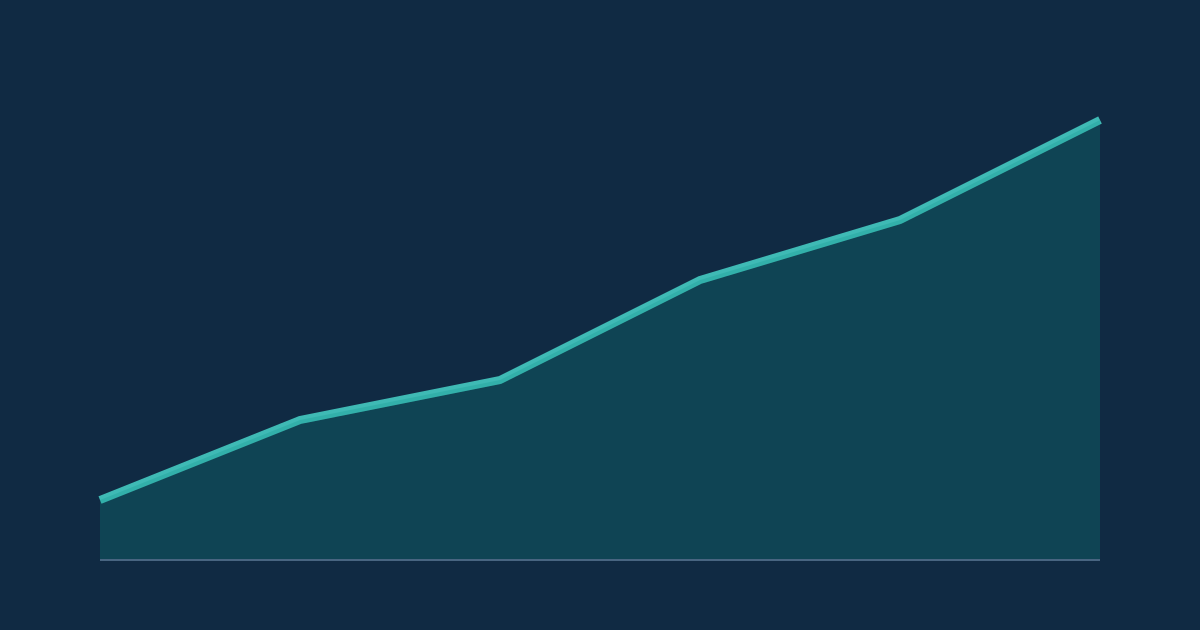
Net interest on the U.S. federal debt has become one of the fastest-growing budget lines. Congressional Budget Office (CBO) baselines and Treasury Monthly Statements show interest outlays climbing as average coupon rates on rolling debt reset higher after the 2022–2023 rate cycle.
Gross federal debt exceeded $35 trillion in 2024–2025, with debt held by the public near 98% of GDP on Bureau of Economic Analysis and Treasury measures — levels last seen in the aftermath of World War II, though the composition of creditors and the role of the dollar differ sharply from the 1940s.
Interest does not campaign. It compounds.
Citizen impact is indirect but real: higher interest share means less fiscal space for infrastructure, tax relief, or new programmes without larger deficits or spending cuts elsewhere. CBO long-term outlooks warn that under current law, debt-to-GDP continues to rise over the next decade if primary deficits persist.
Neither “taxes alone” nor “cuts alone” narratives capture the arithmetic: primary balance, growth, and the real interest rate jointly determine whether the ratio stabilises. Markets still absorb Treasuries deeply; that is not the same as saying interest costs are painless for future taxpayers.