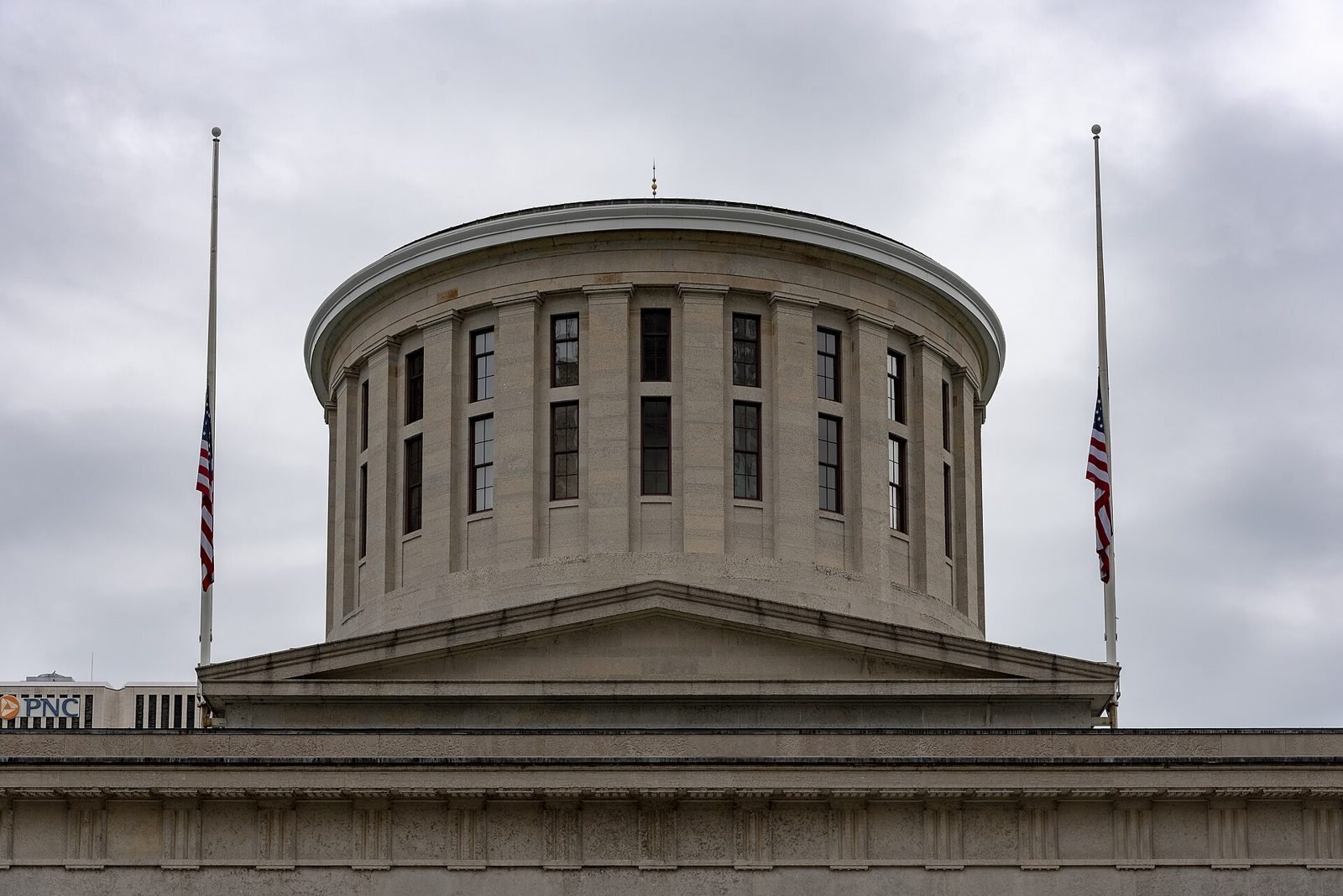
On 15 October 2026 Ohio’s Tenth District Court of Appeals decided Columbus City School Dist. v. State, 2026-Ohio-4047 (Nos. 25AP-603, 25AP-604 and 25AP-605). Judge David J. Leland wrote the opinion; Presiding Judge Boggs and Judge Dingus concurred. The panel affirmed the Franklin County Common Pleas Court’s 24 June 2025 summary judgment. That ruling declared the state’s private-school voucher programs unconstitutional under Ohio Const. art. VI, § 2.
The plaintiffs are six school districts (Columbus, Cleveland Heights-University Heights, Richmond Heights, Lima, Barberton and Dayton), the Ohio Coalition for Equity and Adequacy of School Funding, and four students. Individual intervenors and a Catholic-school-family group joined the state in defending the program.
“The Supreme Court of Ohio in Goff foretold the possibility that someday a greatly expanded voucher program could create a competing system of uncommon schools. Today is that day.”
The numbers in the opinion
- EdChoice and EdChoice Expansion cost taxpayers almost $1.4 billion in fiscal years 2024 and 2025 (¶ 1).
- The state provides about $700 million a year to participating nonpublic schools (¶ 88).
- Since 2023 Am.Sub.H.B. No. 33, virtually every Ohio student is eligible. Households at or below 450% of the federal poverty level get the maximum: $6,166 a year for K–8 and $8,408 for grades 9–12. The wealthiest families still get $650 (K–8) or $950 (9–12) (¶ 19).
Why the court struck it
- Separate system: participating private schools face “materially less extensive” fiscal reporting, licensure and operating oversight than public districts. A state official testified that violations are usually found only if a parent or the school reports them, and that corrective plans are not followed up.
- Selection: private schools keep control over admissions, which the court called “cherry-picking”.
- Geography: provider schools cluster in urban counties, so the court said rural taxpayers fund schools many rural families cannot reach.
- Fiscal harm: the court found that underfunding, enrollment losses and weaker local levy support combine to undermine public schools.
The court said it does “not suggest that school vouchers in all forms violate the Ohio Constitution”. Its holding is limited to EdChoice and EdChoice Expansion “as presently structured, funded, and challenged”. It did not reach the religious-control or equal-protection arguments.
What this piece refuses
Do not write that vouchers have been shut off or that families must return to public schools this year. The judgment is stayed. Do not write that the court banned school choice or all vouchers in Ohio. The opinion expressly limits itself to EdChoice as structured. Do not cite a statewide enrolment count as the court’s figure. The opinion gives dollar totals, not a headcount.
Bottom line
Verified as of 19 October 2026 from the 40-page opinion 2026-Ohio-4047: the Tenth District unanimously affirmed that EdChoice and EdChoice Expansion violate art. VI, § 2, and stayed enforcement pending appeal. Watch for the state’s notice of appeal and any Supreme Court of Ohio stay or briefing schedule.